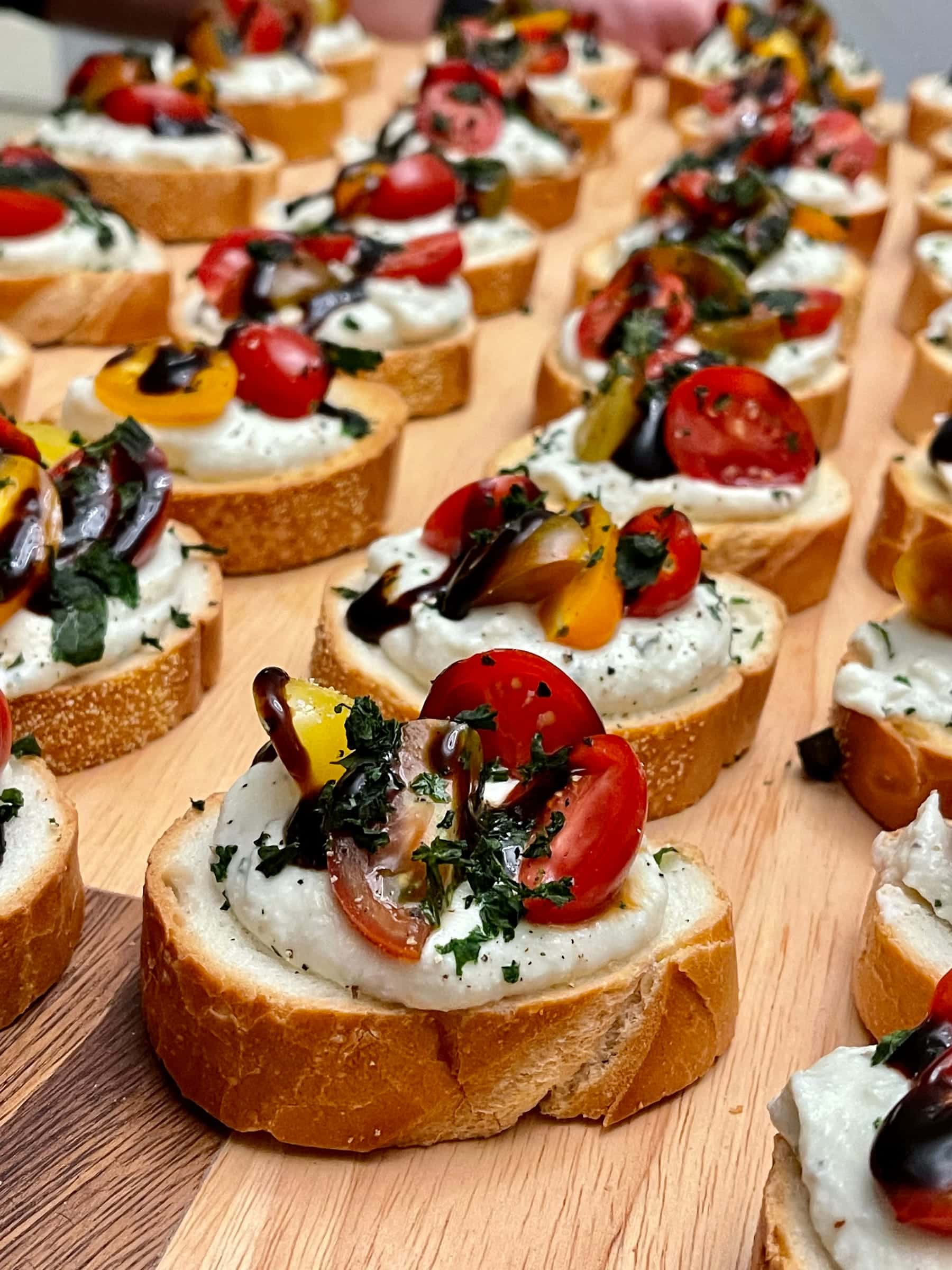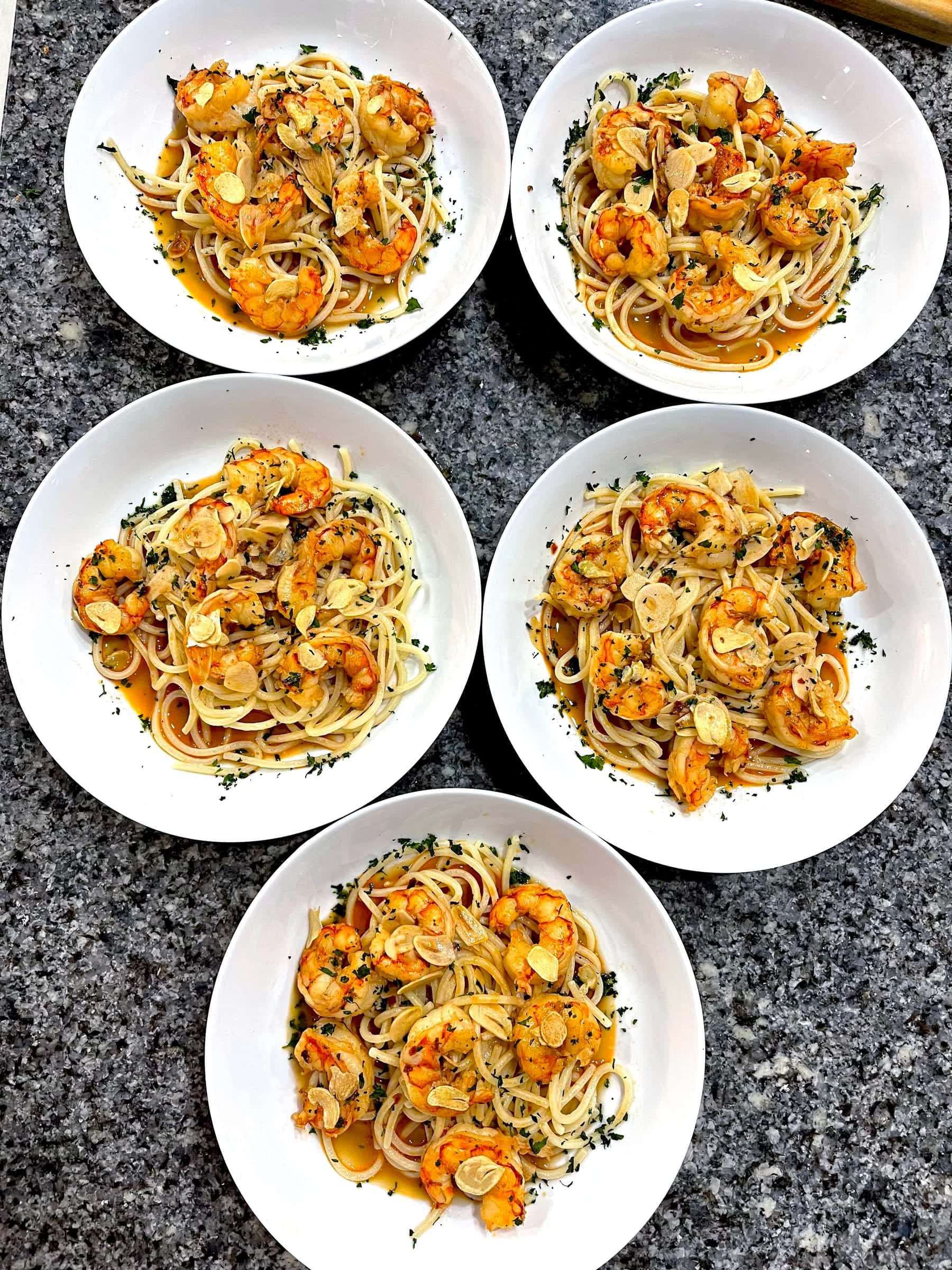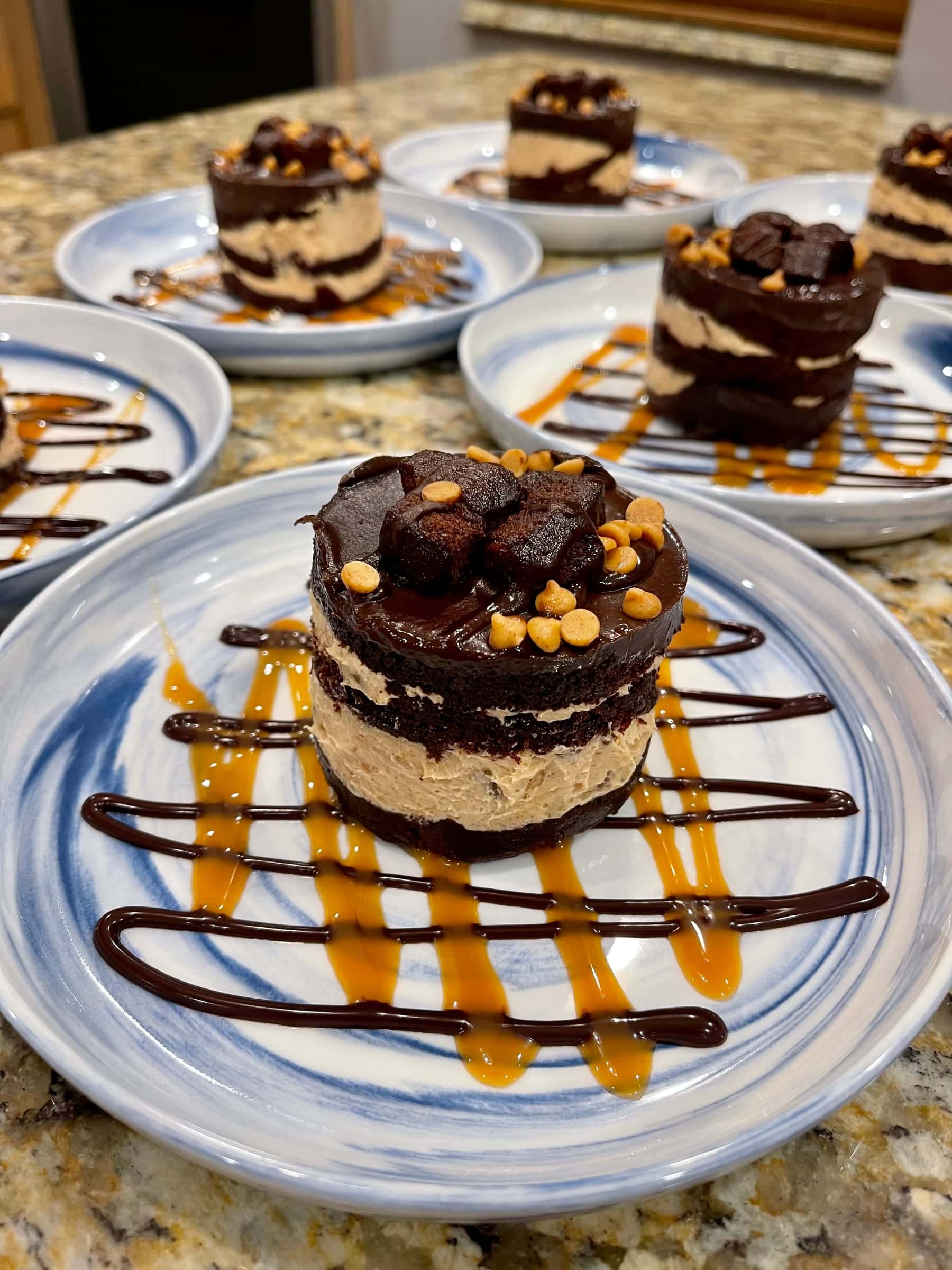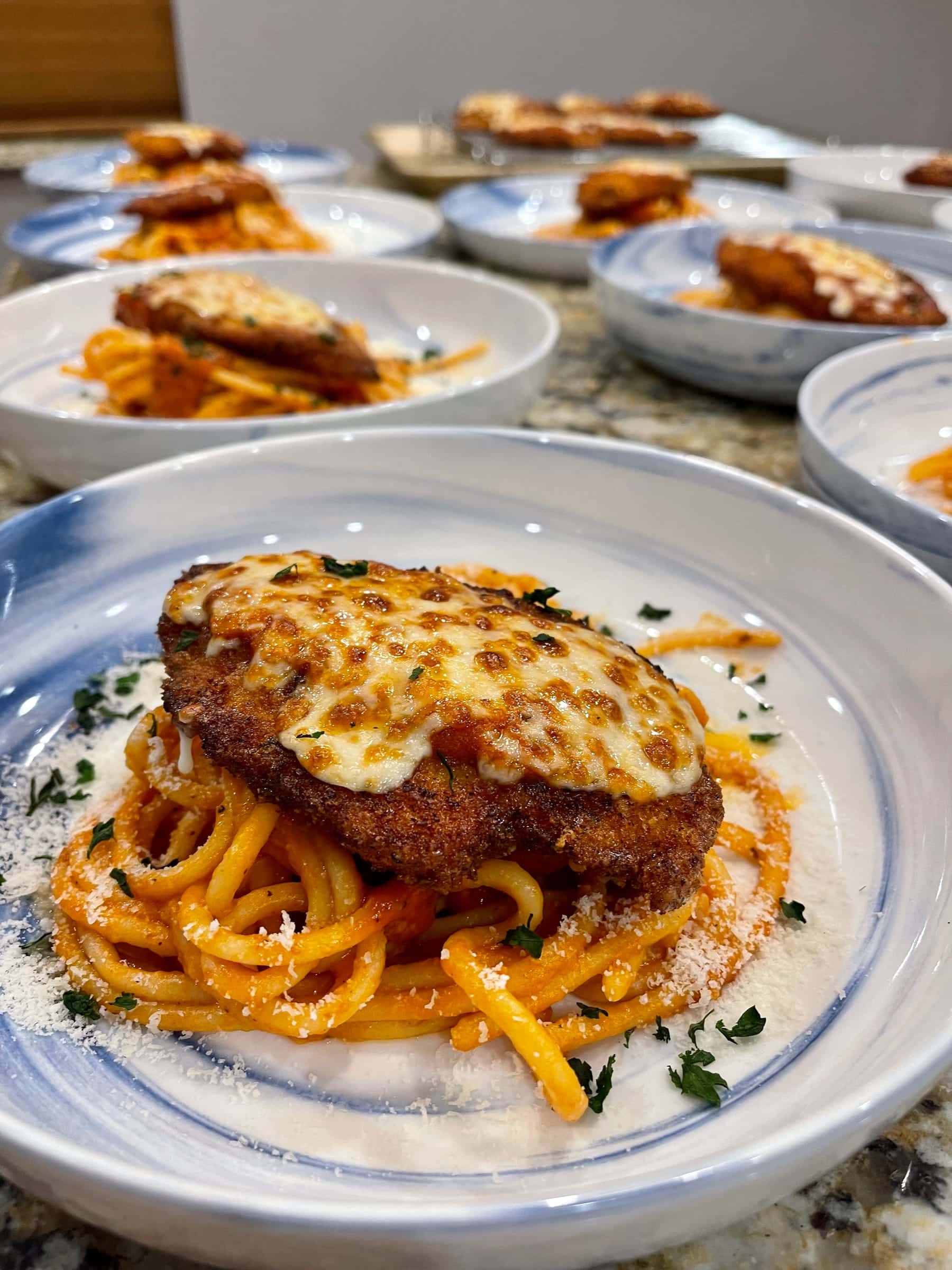

A chef in your kitchen for two to twenty people — a menu built for the evening, courses served at your pace, and nothing left for you to do afterwards.
The whole point of a private chef dinner is that you do not host it. You are at the table when the first course lands, you are still at the table when dessert does, and at no point in the evening do you get up to check on anything. Somebody else is in your kitchen doing that, and then they clean it.
We cook these across Palm Beach, Manalapan, Jupiter, Tequesta, and Wellington — houses, condos, and vacation rentals, for two people at a kitchen island and for twenty around a long table. Anniversaries, birthdays, proposals, bachelorette dinners, and the small holiday gatherings where nobody wants to lose the day to the oven.
An evening, hour by hour
Every dinner is different and the shape of the night almost never is. Here is the version that fits most of them, with a 7:30 sit-down as the anchor.
- Three hours before
- The chef arrives with the shopping already done, and boxes go straight to the counter. Your refrigerator loses two shelves for the night. Nothing is asked of you after you have pointed at the oven and the trash.
- One hour before
- Prep is finished and the first course is staged. This is the quietest the kitchen will be all evening, and it is when we walk the table with you, agree the pace, and find out whether a guest is arriving with a restriction nobody mentioned.
- Guests arrive
- Something to eat within ten minutes of the door. A bite in hand while people are still greeting each other does more for a room than any course later in the night.
- Dinner
- Courses fired one at a time and carried out as the table finishes the last one. If the conversation is good, we slow down. The kitchen waits for the table rather than the other way around.
- After dessert
- Coffee if you want it, and the kitchen gets put back together while you are still sitting down. Most nights we are out the door within an hour of the last plate.
What your kitchen actually needs
Less than people expect. Home kitchens are smaller than restaurant kitchens and quieter than them, and a dinner for eight does not need much of one. The honest list:
- A working oven and two burners. Four burners is a luxury; two is a plan.
- Roughly three feet of clear counter. We will use every inch you have, and we can work in less.
- A sink we can run and a trash can we can reach. If the dishwasher works, we will use it and empty it.
- Two cleared refrigerator shelves. Clearing them before we arrive saves twenty minutes we would rather spend cooking.
- A couple of outlets near the counter, for induction or a warming plate when the menu calls for one.
- A table. It is the last thing on the list and the only one we cannot bring.
Courses, and how many is right
Course count is really a decision about how long you want to be at the table. More courses is not more food. It is smaller portions across a longer evening, which is almost always the better trade.
- Three courses
- About two hours seated. First course, main, dessert. The right call for a weeknight birthday and for any group that would rather talk than eat.
- Four courses
- Two and a half to three hours. A cold opener, something warm and small, the main, then dessert. This is what we cook most often, and it carries eight to twenty comfortably.
- Five or six courses
- Three and a half hours and up, with portions cut down to match. It is the format for an anniversary or a proposal dinner for two to six. Above about ten people the pacing gets hard to hold out of one home oven, and we will tell you that before you book it.
Wine is your purchase and our problem
You buy the bottles. We will do the thinking — send the menu draft to whoever you buy wine from, or tell us what is already in the house and we will write the courses toward it, which frequently makes the better dinner anyway. On the night the chef opens, chills, decants, and pours between courses so nobody at the table has to keep an eye on the glasses. If you want a line about each pairing said out loud before the course, ask for it; the default is that the wine simply appears. One limit worth naming: we are cooks, not a bar. For a longer evening above roughly twelve people who intend to drink through it, a bartender is a genuine addition, and we will say so rather than pretend two hands cover both jobs.
Shopping, sourcing, and the menu staying open
We shop the day of, or the day before for the few things that improve with a night. That is not a flourish, it is the reason your menu stays slightly open until the week of the dinner. If the fish at the counter is not right on Thursday morning, we would rather cook something that is than serve the dish that was printed. You hear about the change before we cook it, not after you have eaten it.
Allergies and restrictions belong at the menu stage, not at the table. Vegetarian, vegan, gluten-conscious, and nut allergies are ordinary work when we know in advance; raised on the night they become a plate that is visibly missing something. If one guest at a table of ten cannot eat shellfish, the fix is not a separate apologetic plate — it is a first course that was never shellfish in the first place.
The kitchen is left better than we found it
This is the part nobody asks about until the morning after, and it is the part that decides whether you book a chef a second time. Dishes are washed or run, the counters and the stovetop are wiped down, the trash is bagged and put wherever you tell us it goes, and whatever is left of dinner is boxed, labeled, and in your refrigerator before we leave. Our dirty pans go home with us — that is our problem, not your sink at midnight. The standard we hold is that somebody walking into the kitchen at eight the next morning cannot tell a dinner for twelve happened in it.