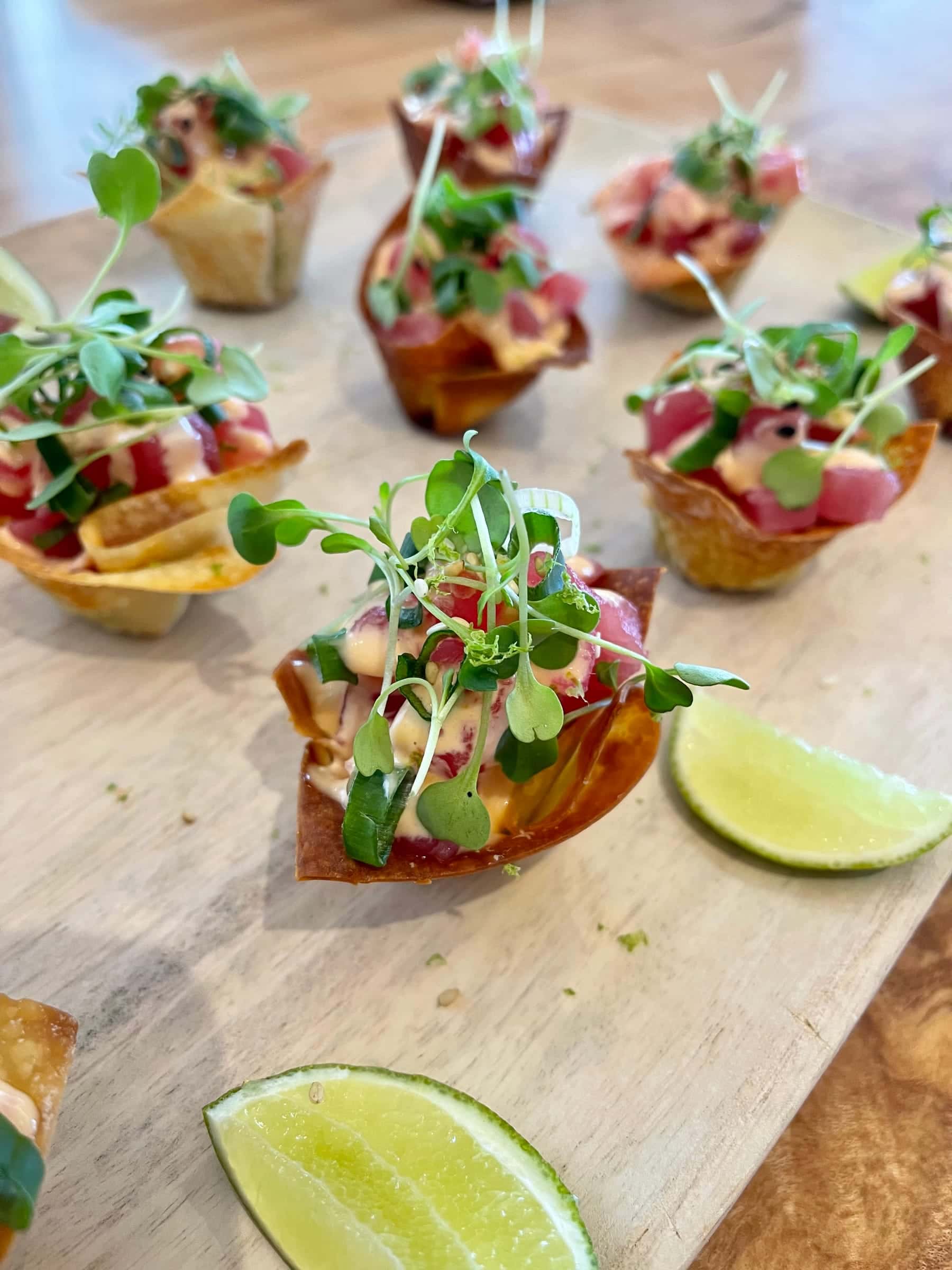

Grazing tables, stations, and cocktail receptions built and styled in place, including the kind of reception that replaces dinner entirely.
A grazing table is the only thing we cook that also has to work as decor. It is finished before the first guest walks in, it sits where the room can see it, and for the first twenty minutes of a party it is the thing everybody is standing around. That is the appeal. It is also the constraint: a format that gets looked at before it gets eaten has to be built in place, and it has to survive being looked at for two hours.
We build them across Palm Beach, Palm Beach Gardens, Jupiter, and Boca Raton — engagement parties, corporate open houses, milestone birthdays, rehearsal dinners, and receptions where the table is not the opener but the whole meal.
What actually goes on the table
There is no fixed list, but there is a structure. A table that reads well has range across five things at once — texture, temperature, colour, salt, and something sweet — and enough of each that the last guest sees roughly the same table the first one did. Most of what people photograph is the produce and the height. Most of what people eat is the cheese, the bread, and whatever is warm.
- Cheeses
- Three to five, chosen to disagree with each other: something soft, something aged and firm, something blue or washed-rind for the people who go looking for it. Cut into shapes a guest can take without needing a plan.
- Cured meats
- Folded and laid in runs rather than fanned into circles. A circle looks finished for ten minutes and looks raided for the rest of the night; a run still reads as built after fifty people have taken from it.
- Something warm
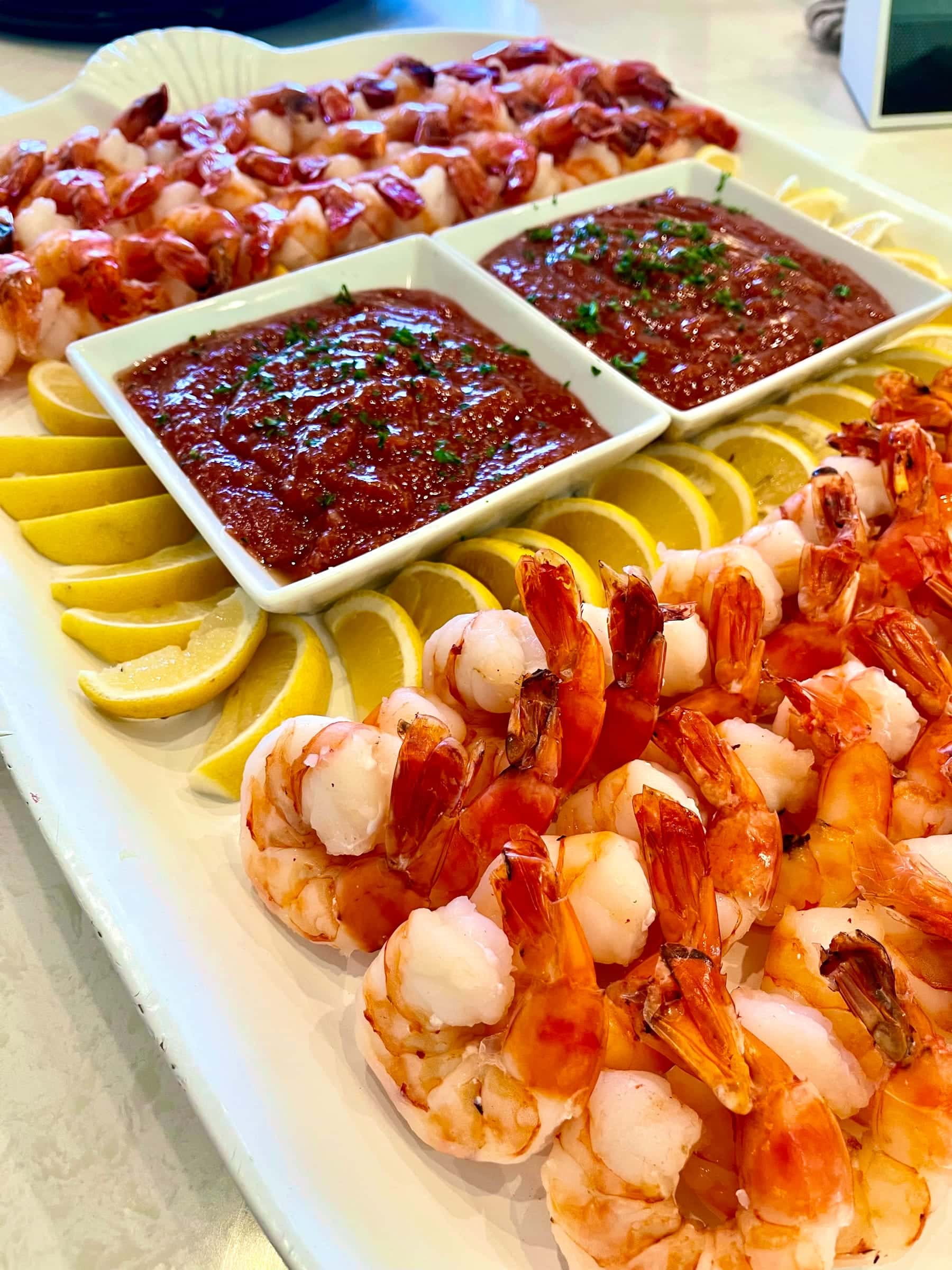
- Meatballs, a baked cheese, marinated shrimp, short rib on polenta. This is the line between a cheese board and a table people can make a meal from. It is also the only part with a real clock on it, so it lands as guests arrive rather than an hour early.
- Dips, spreads, and pickles
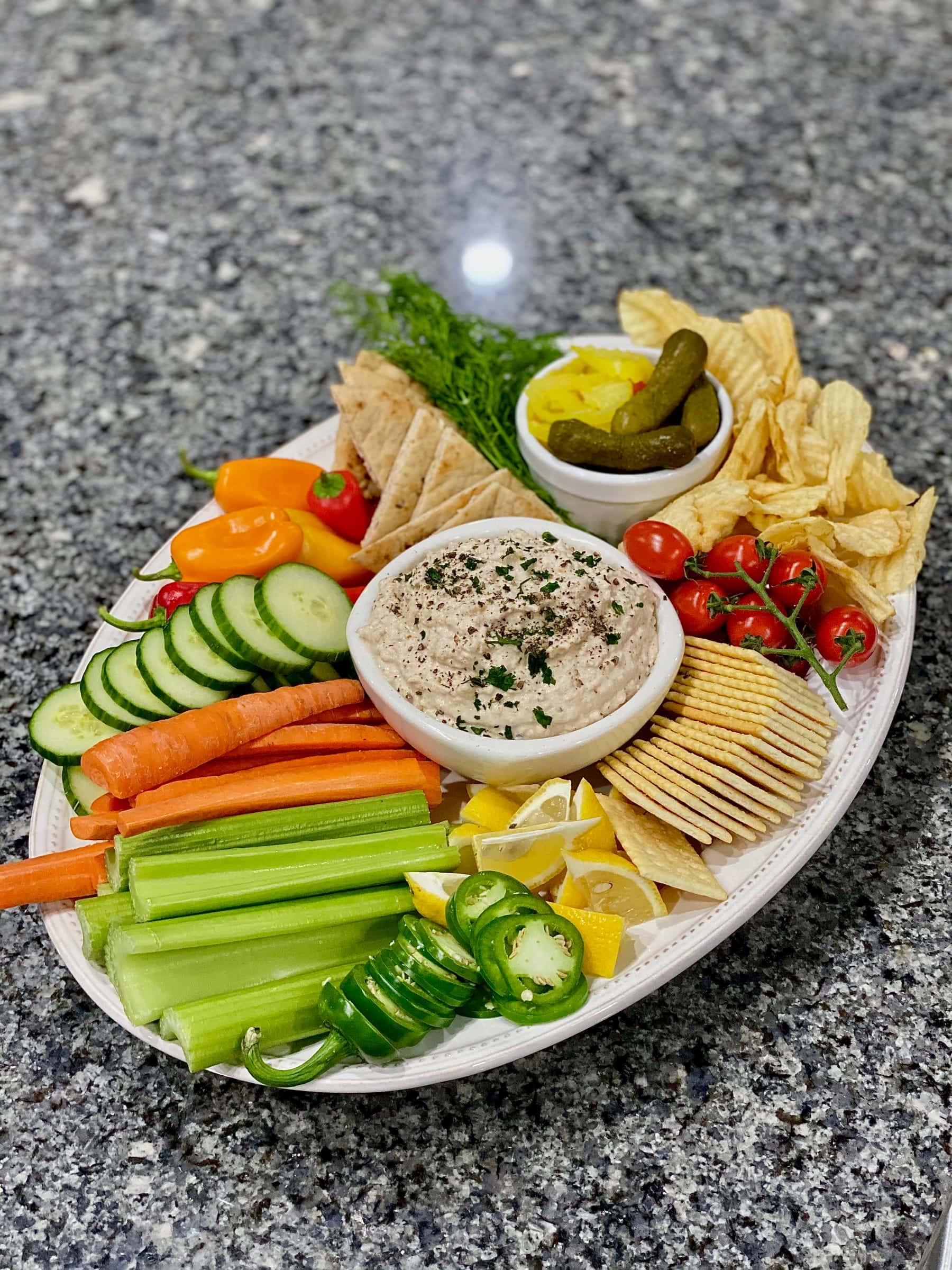
- Whipped feta, romesco, green goddess, marinated olives, pickled vegetables. They cost less than the cheese and they carry the bread once the cheese thins out.
- Bread, crackers, and produce
- Grapes, figs, citrus, berries, herbs. They fill the gaps and hold the colour. Crackers stay sealed until the last ten minutes of setup, because Palm Beach humidity takes them soft faster than any guest takes them.
It gets built where it stands
The build is crates and risers under linen to create levels, boards and slate laid across them, then food set from the back forward so nothing has to be reached over. It takes sixty to ninety minutes depending on length, and it happens on the surface the table will live on. A grazing table assembled somewhere else and carried in is a grazing table with everything slumped to one side.
What we need from you is boring and non-negotiable: the table in its final position, empty and wiped, before we arrive; a clear path from the door to it; and no plan to move it afterwards. We cannot build on a surface that also has to hold the cake later, and we will not build outdoors into weather — under cover or inside is a call best made two days out, not an hour out. If the table is the centrepiece, tell your florist and your photographer where it is going before any of us arrive, because all three of us want the same wall.
Table length scales with the head count
The first question we get is how long the table should be, and the honest answer depends on whether the table is the appetiser or the meal. As a starting point we plan about a foot of table per two to three guests when a dinner follows, and closer to a foot per two when the table is the food. Then we adjust for the room, because access moves the number as much as length does.
- Forty guests before a seated dinner: six to eight feet, one side accessible, no attendant needed if the menu is built to hold.
- One hundred guests with dinner to follow: twelve to sixteen feet of surface, and better as two tables than one.
- One hundred guests where the table is the meal: closer to twenty feet, split across two or three stations, with something warm running behind it.
- Two shorter tables beat one long one in almost every room. A single sixteen-foot run makes one queue and one bottleneck; two eight-foot tables at opposite ends make two short lines and keep people circulating.
- A table pushed against a wall serves at roughly half the rate of the same table pulled out with access on both sides. If the room allows it, pull it out.
A station feeds without anyone carrying a tray
Passed bites need a person. Every tray circulating is a server walking a loop, which means the food stops the moment the staffing hour ends or the room gets too full to walk through. A station does not stop. It is set once, replenished on a schedule, and it keeps feeding for as long as it is stocked — including the twenty minutes when your photographer has taken half the room outside for group shots.
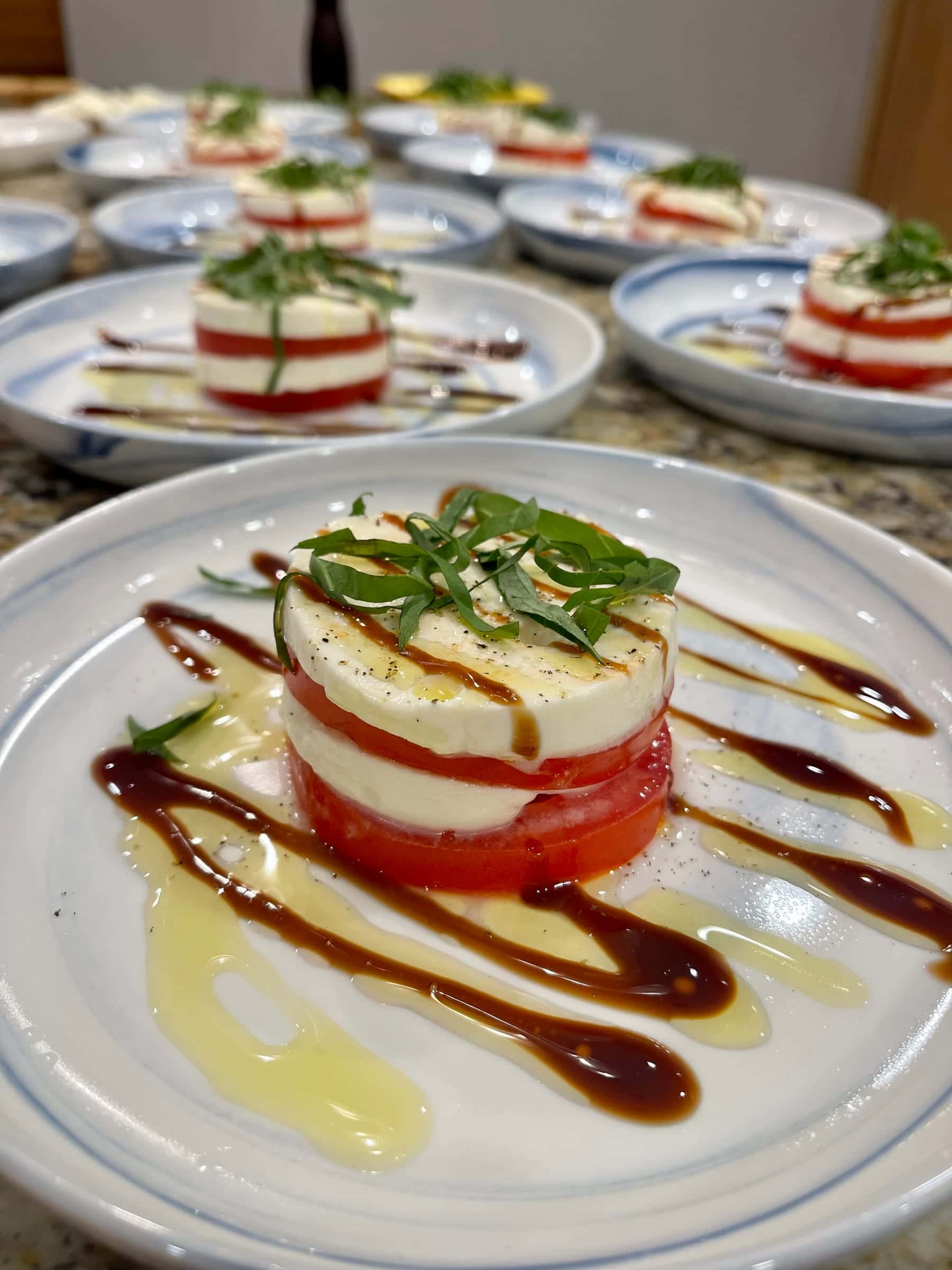
That is why, for the same money, one substantial station usually puts more food in front of more people than two more passed items would. The cost of a passed bite is mostly in the carrying, not the cooking. Where passed still wins: a seated room that does not move, a timeline you need to control to the minute, and anything that has to be eaten within ninety seconds of leaving the pan. Most events we run want both — a station holding the middle of the room, and two or three passed items working the edges where nobody is walking to the table.
A grazing table is not dinner. A cocktail reception can be.
These two get conflated and they are different orders of food. A grazing table before a seated dinner is an opener: guests take a few things, drink, and leave room for what is coming. Four to six pieces per guest across an hour is right in that shape, and a table that is too generous at that point buys you a dining room that is not hungry.
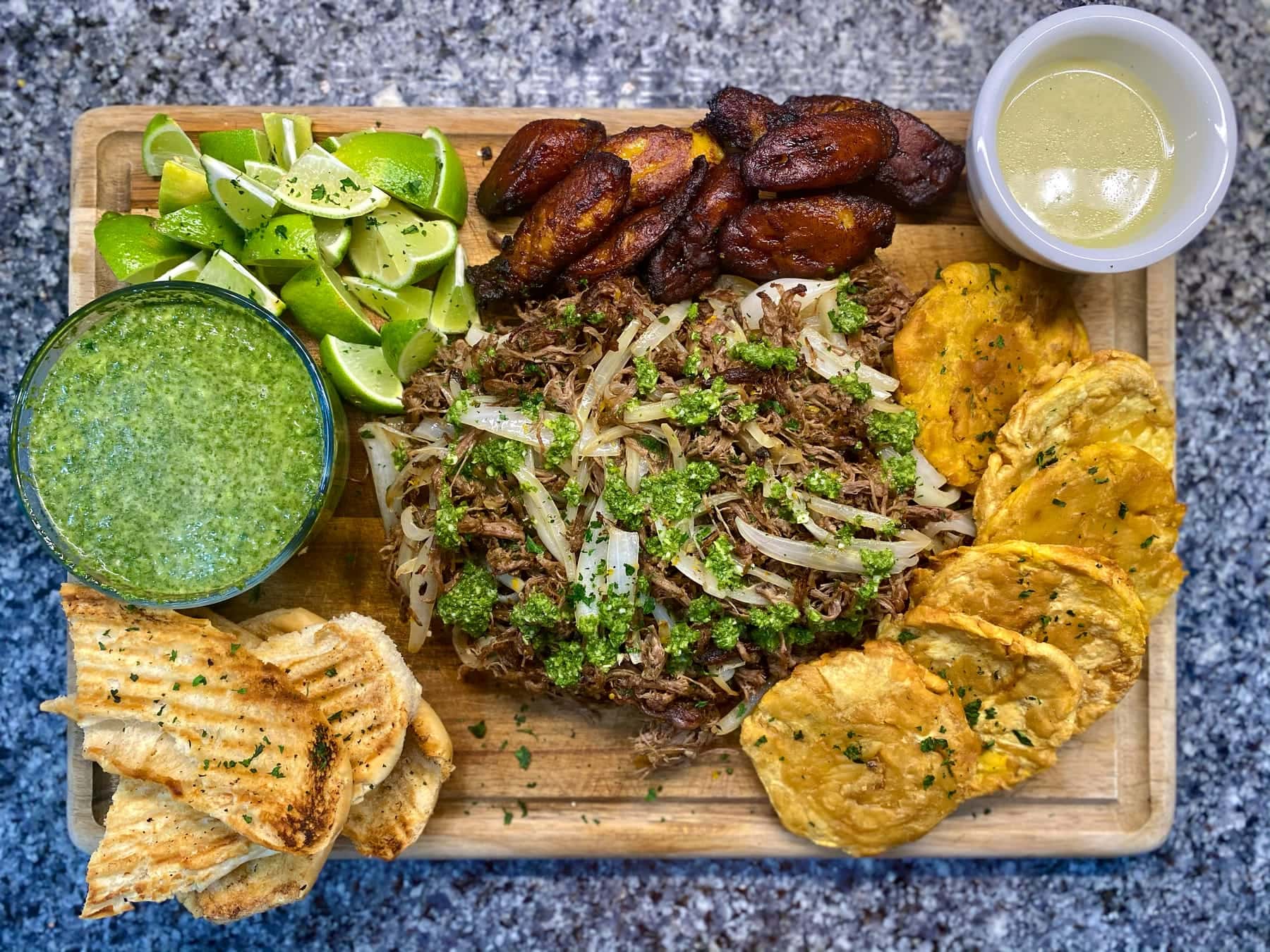
A cocktail reception that replaces dinner is a different build entirely. We plan roughly ten to fourteen pieces per guest across the whole event, spread over the arrival, the middle, and a late push, plus at least one substantial station that eats like a meal — a carving board, pasta, tacos, or poke built to order. And seating for about half your guests, which is the line people cut and then regret. Nobody minds standing for the first hour. By hour three, half the room is looking for somewhere to put a plate down, and the guests who cannot stand for three hours are usually your parents and your grandparents.
Heat, humidity, and the raw bar rule
Anything sitting out is on a clock, and down here the clock runs faster. Hurricane season, June through November, is the honest worst case: soft cheese sweats, cured meat goes greasy, cut fruit weeps into whatever is beside it, and chocolate is off the table in high summer unless the room is air conditioned. Outdoors in August, our working limit for a spread with dairy on it is about ninety minutes, and less in direct sun. So we design around it — firm cheeses over soft, marinated and pickled vegetables over dressed leaves, citrus-cut fruit that holds its edge, crackers staged separately — and we keep backup cold on site so we can rebuild the table rather than let you watch it die.
The raw bar has one rule, and it is the reason we would rather talk you out of one than do it badly: staff it and replenish it, or it is an empty bed of ice by the time the speeches start. Oysters shuck to order, which means a person standing there for the whole service. Chilled shrimp and ceviche vanish in the first twenty minutes when a room likes them, so they need a restocking schedule and cold backup on site, not one beautiful platter set out at six and abandoned. And we will not put raw seafood on an unattended table outdoors. That is not a preference — it is the one thing on a grazing table with no margin for error in this climate.