
The service style decides your staffing bill, your timeline, and how the room feels. Here is what each one is genuinely good at.
Couples usually pick a service style the way they pick a font: by feel, early, and without much information. Then it turns out that choice set the staffing bill, decided whether dinner takes forty minutes or ninety, and determined whether your guests spend the evening talking to each other or queueing.
There are four real options. None of them is the correct one. Each is excellent at something and bad at something else, and the trick is matching that to your room, your guest list, and your timeline.
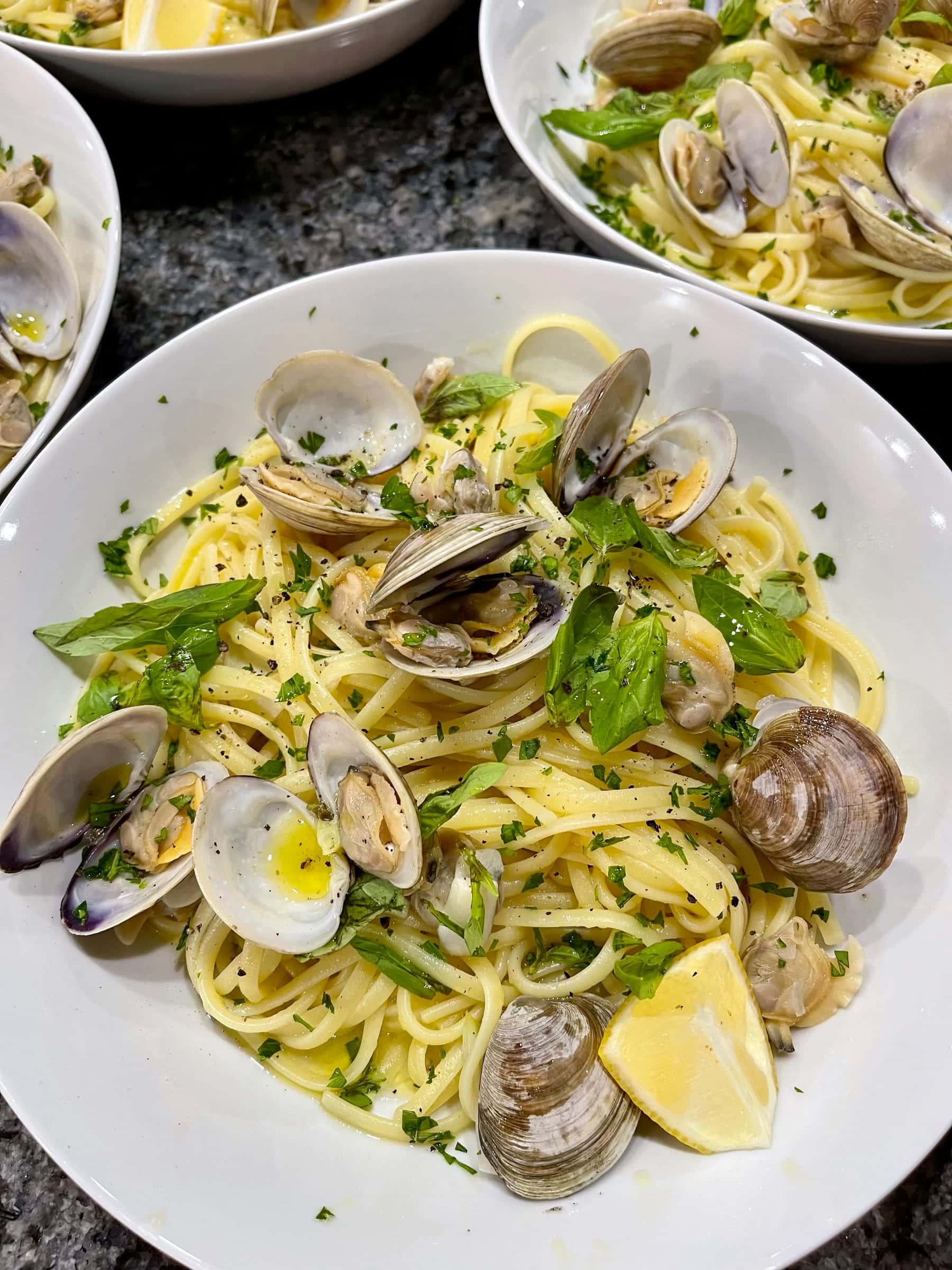
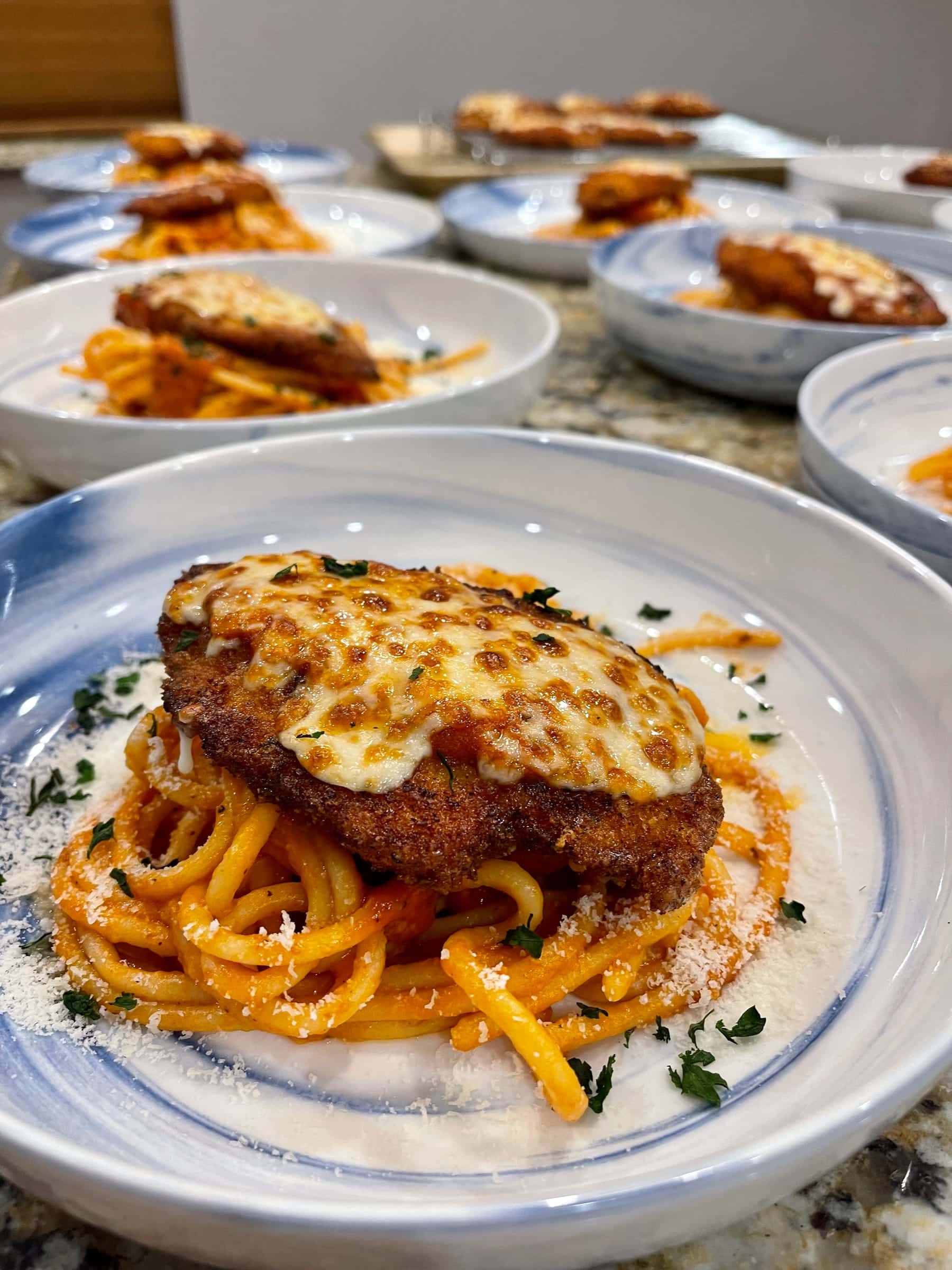
Plated
Everyone is seated. Courses arrive at the table, ideally to a whole table at once. It is the most controlled version of dinner, and the most formal.
What it is good at
- Timing. You know exactly when dinner starts and ends, which matters enormously if you have speeches, a first dance, and a hard venue curfew to fit around.
- Portion control, which means less waste and a food cost you can predict to the plate.
- Presentation. This is the style where the plate itself is part of the design.
- Dietary needs, handled invisibly. The vegan guest gets a plate that looks like it belongs at the wedding, not a plea at the buffet.
What it costs you
- Staff. Plan on roughly one server per ten to twelve guests. That is the highest ratio of any style and it is the reason plated reads as expensive.
- Choice. Guests pick from a short list weeks in advance, and someone has to track who chose what and get it to the right chair.
- Kitchen. Plating 150 covers at once needs space and equipment. A venue with no real kitchen makes this hard.
Buffet
Food is set on a line, guests serve themselves, tables are released in order. The most common wedding format in America, and the most commonly done badly.
What it is good at
- Choice. Everyone eats what they want, in the amount they want. Picky eaters and big appetites both leave happy.
- Staffing cost. Roughly one server per twenty guests, which is the real saving over plated.
- Variety without complexity. Three proteins and four sides is easy on a buffet and expensive plated.
What it costs you
- More food. People serve themselves generously. A buffet needs meaningfully more food than the same headcount plated, which eats into the staffing saving.
- Time and queueing. One buffet line serves roughly 60 to 80 guests before the wait gets ugly. Above that you want a double-sided line or two stations.
- Room feel. There is a stretch of the evening where a third of your guests are standing in a line holding a plate. Good release order and enough lines fix this; nothing else does.
If you take one thing from this section: the number of serving lines matters more than the menu. A beautiful buffet with one line at a 160-person wedding is a forty-minute queue, and that is what people will remember.
Family-style
Platters and boards go to the centre of each table and guests pass them. Everyone is seated, nobody queues, and the table does the serving.
What it is good at
- The feeling. This is the warmest style there is. Strangers seated together have to talk to each other in the first ninety seconds, because someone has to pass the short rib.
- Speed. Everyone eats at the same time with no line and no course-by-course pacing.
- Abundance. A table covered in platters reads as generous in a way a plate cannot.
What it costs you
- Table space. Platters compete with centrepieces, glassware, and candles. Talk to your florist before you commit, or you will be choosing between the arrangement and the food on the night.
- Food volume, similar to a buffet — you are sending abundance to every table.
- Rentals. Serving platters, spoons, and stands for every table, which is a real line on the quote.
- Larger tables. It works beautifully on rounds of ten and awkwardly on rounds of six.
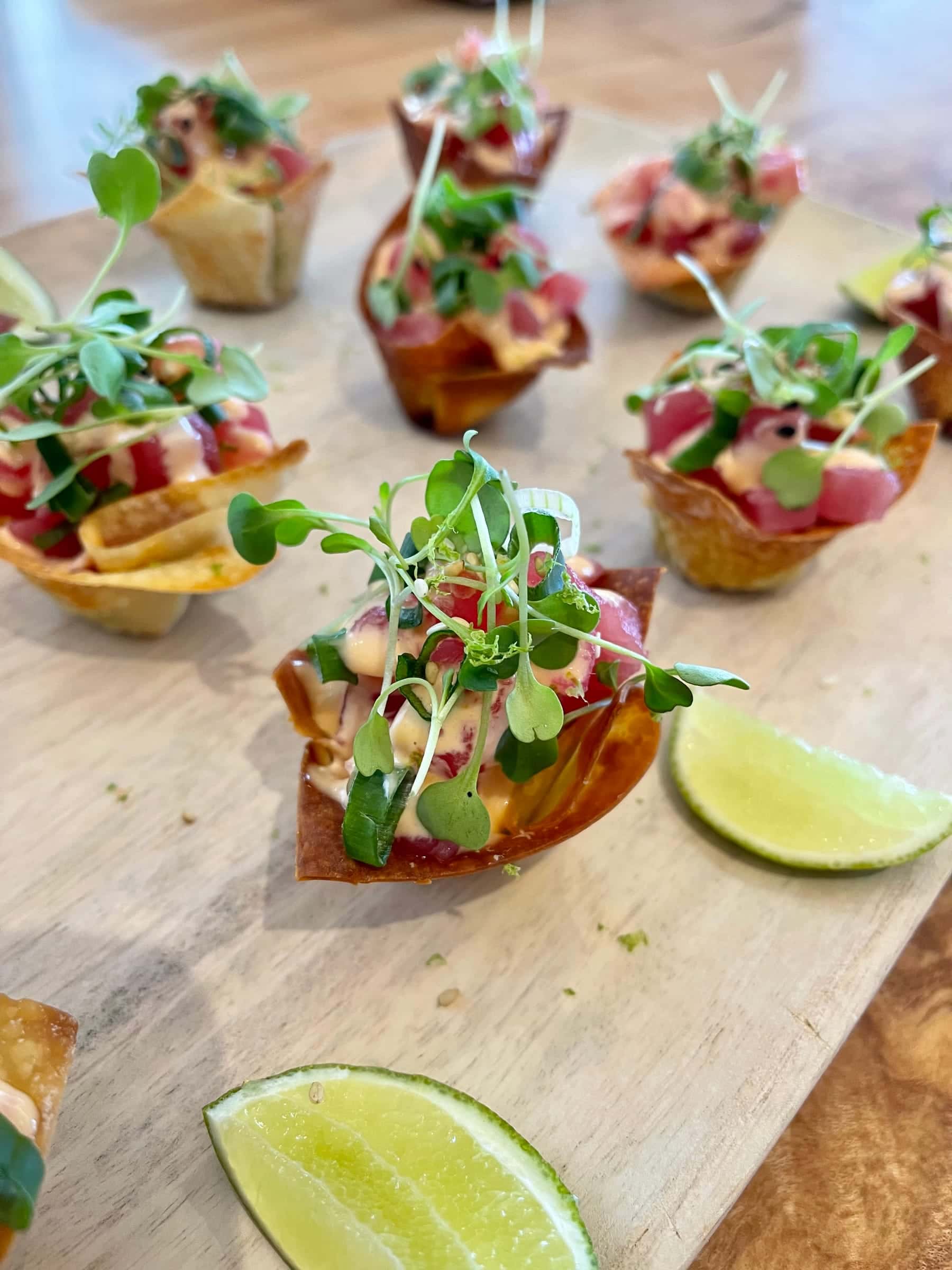
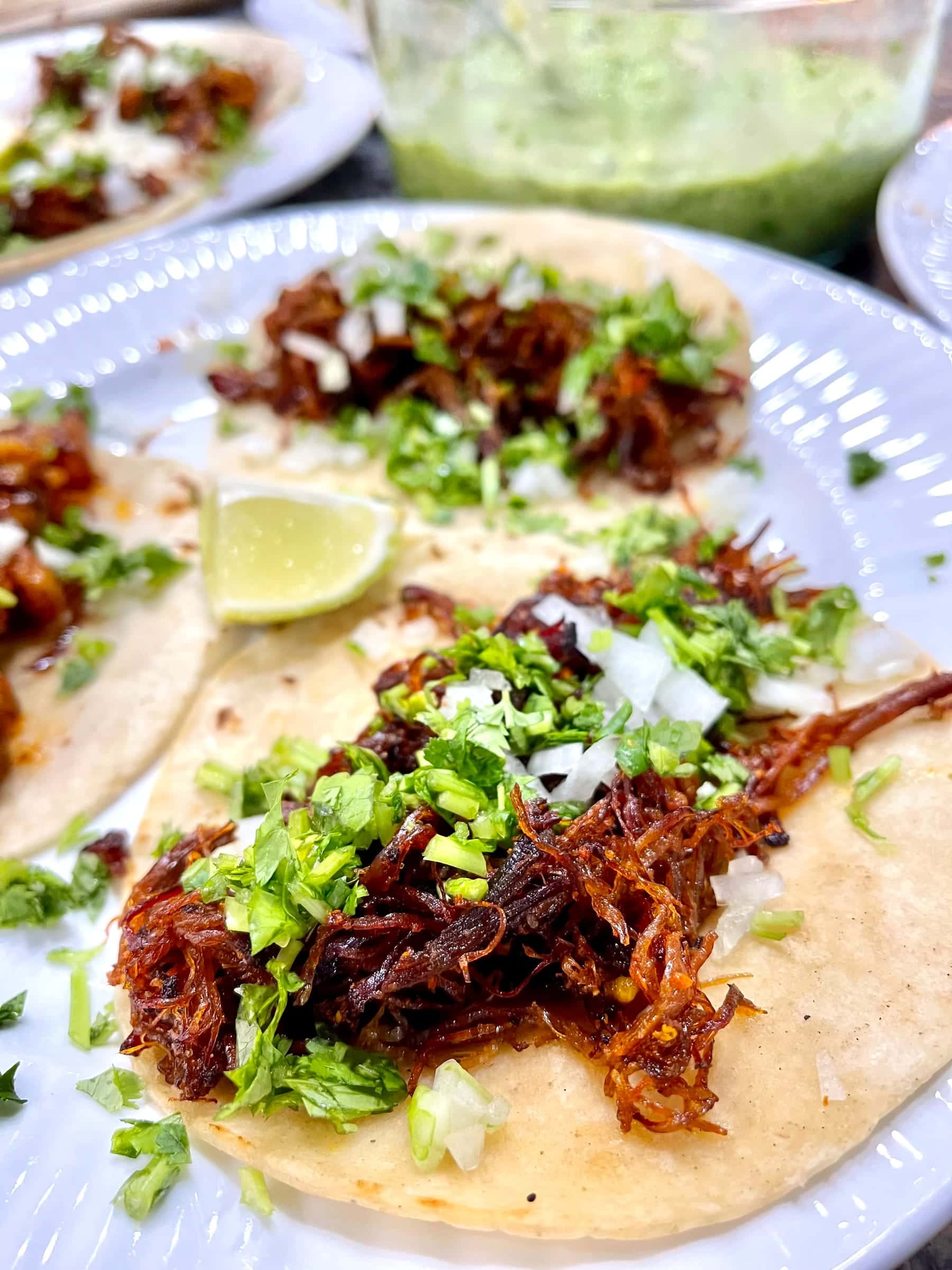
Stations
Several distinct food points around the room, each doing one thing well — a carving station, a pasta station, a raw bar, a taco station. Guests move, graze, and rarely sit for long.
What it is good at
- Movement. Nobody is anchored to a chair, so the room mixes all night. For a crowd that does not know each other, this is the best format there is.
- Spectacle. Food finished in front of guests is entertainment, and it photographs well.
- Spreading the load. Four stations means four short lines instead of one long one.
- Cultural range. Stations are the easiest way to serve two or three cuisines properly at one wedding without the menu reading as confused.
What it costs you
- Money, usually the most of any style. Each station needs its own equipment, its own power or fuel, and often its own attendant.
- Space. Four stations plus circulation is a floor plan question, not a menu question.
- Seating discipline. If you want speeches and a seated moment, stations fight you. Many couples run stations for a cocktail-style reception and skip the formal dinner entirely.
How to choose in five questions
- Do you have a hard curfew or a tight speech schedule? Plated gives you the most control over the clock.
- Do your guests know each other? If not, stations or family-style will do more for the night than any menu decision.
- Does the venue have a real kitchen? No kitchen pushes you away from plated and toward buffet, family-style, or stations.
- How many guests? Above about 150, single-line buffets stop working and you need multiple lines, stations, or plated service.
- What do you want the photographs to look like? Plated is elegant, family-style is warm, stations are alive. All three are valid answers.